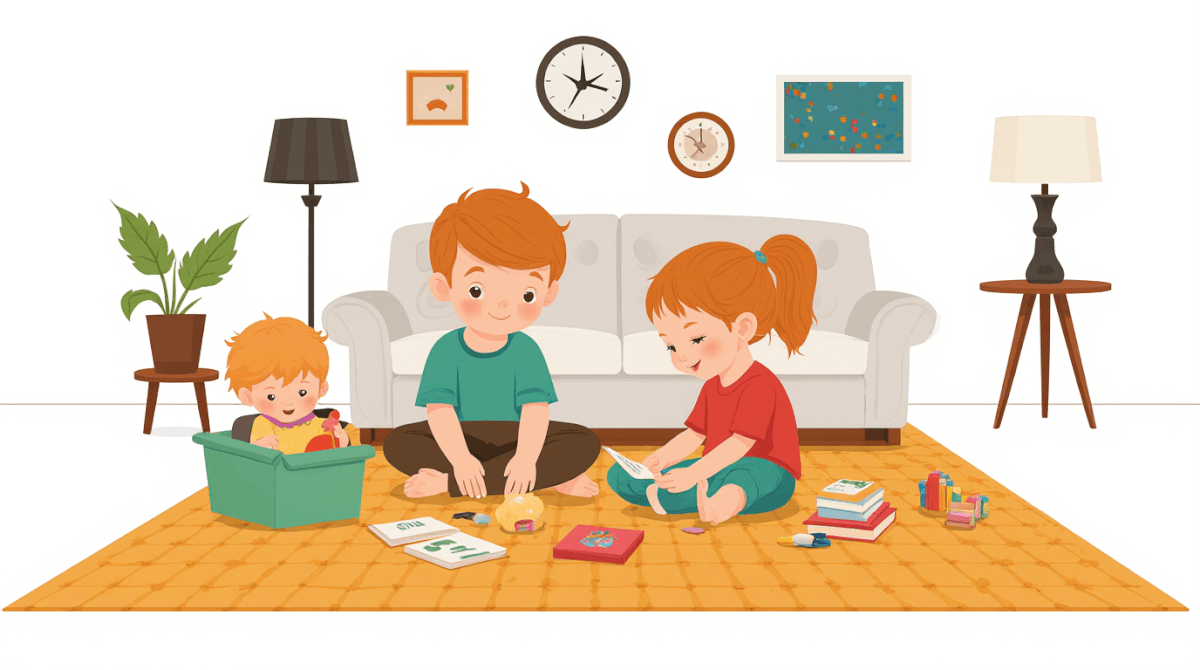
Gentle leadership can significantly influence a child’s growth, fostering not just their emotional and social development but also enhancing cognitive abilities and overall well-being. This form of leadership encourages a nurturing environment where children feel secure and supported, allowing them to explore their surroundings confidently and develop essential life skills. The mechanism through which gentle leadership impacts growth lies in the establishment of positive relationships, promoting autonomy and self-regulation, and encouraging curiosity and exploration.
In environments characterized by gentle leadership, children are provided with consistent emotional support and understanding. This can be likened to the nurturing care a parent might give their child when they encounter challenges or difficulties. If a child struggles with completing a puzzle, a gentle leader would offer encouragement without imposing pressure. Instead of saying, “You must finish this now,” such a leader might say, “I see you are having trouble; let’s take a break and come back to it later.” This approach helps children develop resilience by allowing them to face challenges in their own time and with support.
The nurturing environment created by gentle leadership also plays a crucial role in promoting autonomy. Autonomy is the ability to make independent choices, which is fundamental for a child’s development. When children are given opportunities to make decisions within safe boundaries, they learn to trust their judgment and develop self-reliance. Allowing a young child to choose between two healthy snacks can teach them about making informed decisions based on personal preferences and health considerations.
Gentle leadership encourages curiosity and exploration by providing a supportive framework for children to ask questions and seek new experiences. Curiosity drives learning, and when nurtured properly, it can lead to enhanced cognitive development. Consider a scenario where a child shows interest in insects; instead of dismissing their fascination or ignoring it entirely, a gentle leader might engage the child, perhaps even taking them on a nature walk to observe different creatures up close. This kind of interaction not only satisfies the child’s curiosity but also introduces them to new knowledge and experiences that enrich their understanding of the world around them.
The relationship between children and their leaders can be compared to a garden where seeds are planted and nurtured until they grow into strong, healthy plants. Just as a gardener carefully tends to the soil, water the plants, and prune away dead leaves, gentle leadership involves providing the necessary support for children to thrive. This nurturing environment helps build trust between the leader and the child, making it easier for the child to express themselves freely without fear of judgment or criticism.
Autonomy is further reinforced through gentle guidance rather than strict control. A gentle leader does not dictate every step a child must take but instead provides direction when needed. If a group of children are playing and one starts to engage in an activity that could be dangerous, the leader might gently intervene by suggesting safer alternatives or reminding them of safety rules without scolding or forcing compliance. This approach teaches children about boundaries and consequences while respecting their individuality.
In addition to fostering autonomy, gentle leadership also encourages self-regulation—a skill essential for managing emotions and behaviors effectively. By learning how to handle their feelings constructively, children become better equipped to navigate complex social situations and make responsible decisions. A child who has experienced a gentle leader might show improved emotional regulation by seeking calm spaces during moments of anxiety or using deep breathing exercises taught by the leader.
The impact of these developmental processes is far-reaching. Children who grow up in environments where gentle leadership prevails often exhibit higher levels of empathy, self-esteem, and social competence. These qualities are crucial for navigating relationships both inside and outside the home. A child’s ability to regulate their emotions and behaviors positively correlates with academic success and overall well-being throughout adolescence and adulthood.
Environments lacking gentle leadership can stifle growth. Children may struggle with emotional regulation or exhibit behavioral issues due to constant pressure or lack of support. Children who are frequently criticized for mistakes might develop a fear of failure, leading them to avoid taking risks and limiting their potential for learning and personal development.
To illustrate the broader impact, consider a classroom setting where gentle leadership is practiced. Students in such an environment tend to be more engaged and motivated, as they feel valued and supported by their teachers. This positive atmosphere translates into better academic performance and stronger social bonds among peers. A classroom dominated by authoritative or harsh leadership styles might see lower engagement levels and higher instances of misbehavior.
Gentle leadership is a powerful tool in shaping growth and development through its influence on emotional security, autonomy, curiosity, and self-regulation. By creating nurturing environments that support these aspects, leaders can foster well-rounded individuals capable of thriving in diverse social contexts. While the implementation of gentle leadership requires patience and understanding, the benefits it brings to children’s overall well-being far outweigh any initial challenges.
In summary, gentle leadership plays a critical role in guiding growth by promoting emotional security, fostering autonomy, encouraging curiosity, and enhancing self-regulation. Through its positive impact on these key areas, this approach sets the foundation for holistic development that extends beyond childhood into adulthood.