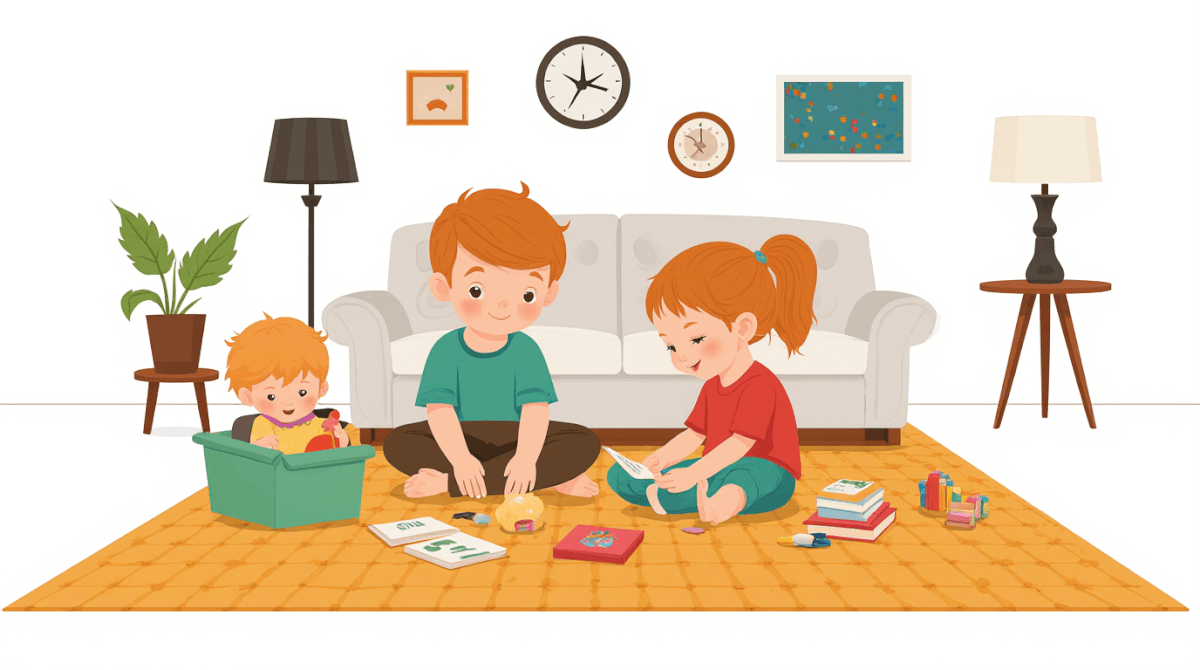
Stability creates an environment where children feel secure, which is essential for their overall development. When a child experiences consistent routines and predictable circumstances, their brain develops stronger connections that help manage stress effectively. The hypothalamus-pituitary-adrenal (HPA) axis, often described as the body’s main mechanism of handling stress, operates more efficiently when faced with stable environments. A child who grows up in an environment with predictable patterns is better equipped to handle unexpected situations without feeling overwhelmed.
Let’s consider a scenario where a young boy named Sam lives in a household with erratic meal times and unpredictable bedtimes due to his parents’ frequent travel. Without consistent routines, his body’s HPA axis may struggle to maintain balance during stressful situations. This inconsistency can lead to higher levels of cortisol—a hormone responsible for the stress response—being released more frequently than necessary. Over time, this chronic stress can negatively impact Sam’s ability to concentrate and manage emotions effectively.
Consider another young girl named Lisa who lives in a home where every morning starts with a family breakfast followed by a designated activity schedule. Lisa’s body learns to expect these regular events, allowing her HPA axis to function more efficiently. When unexpected events occur—such as an urgent meeting or doctor’s appointment—the impact on Lisa is less severe because she has developed coping mechanisms from repeated experiences of predictability.
The relationship between stability and emotional resilience extends beyond just stress management. Emotional resilience refers to the ability to bounce back from adversity, which is crucial for a child’s mental health and future success. Consistent environments that provide security help children develop these skills by giving them a stable base from which they can explore their surroundings with confidence.
Imagine Lisa going through a difficult time at school—perhaps she’s being bullied. Due to the emotional stability provided by her predictable home environment, Lisa is better prepared to deal with this challenge. She might seek support from her parents or confide in trusted adults knowing that these relationships are consistently reliable. Sam who lives in an unstable household may find it harder to cope as he lacks a consistent source of support during stressful times.
The role of stability extends beyond just emotional well-being; it also impacts cognitive development. A stable environment allows children to focus more on learning and exploration without being constantly distracted by unpredictable events or worries about their basic needs. A child living in a home with regular meal times can use this predictability to plan activities around eating, ensuring they are not starving before engaging in play or educational tasks.
Research from the University of California at Los Angeles (UCLA) has shown that children who experience chronic stress due to unstable environments may have reduced gray matter volume in areas critical for learning and memory. This suggests that stability is not only important for emotional regulation but also crucial for cognitive function. Consistent routines can enhance brain development by providing a stable framework within which new experiences can be integrated.
In addition to individual psychological benefits, stability has broader implications on social interactions. Children who grow up in stable environments tend to develop better interpersonal skills as they learn through predictable family dynamics and social structures. They are more likely to form secure attachments with caregivers and peers, which is essential for healthy development.
Consider a scenario where two children from different backgrounds interact at school. One, Alex, comes from a home where stability has been the norm, while the other, Jordan, experiences frequent changes in their living situation due to family relocations. Over time, Alex may develop stronger social skills and a better understanding of norms and expectations through consistent interactions with caregivers and peers. These skills are reinforced by predictable routines that provide clear boundaries and expectations.
Jordan might struggle more with forming stable relationships due to the unpredictability in their life circumstances. This can lead to difficulties in adapting to new social situations and maintaining friendships over time. While both children will encounter challenges as they grow older, their differing experiences of stability have set them on somewhat divergent paths.
It is important to note that while stability provides numerous benefits for young minds, it does not eliminate all stress or adversity. Children still face various challenges such as academic pressures or social conflicts; a stable environment equips them with the tools needed to navigate these issues more effectively.
The impact of stability on young minds also extends into adulthood. Individuals who experienced consistent and predictable early environments tend to have better long-term mental health outcomes. They are less likely to develop anxiety disorders or depression later in life due to their ability to manage stress more efficiently from a young age.
Stable childhoods often foster a sense of trust and security that can extend beyond personal relationships into professional settings. Adults who grew up with consistent routines are better prepared for the demands of work environments where predictability is crucial.
It’s important to recognize that stability does not mean a lack of change or flexibility. The key lies in consistency within a framework that allows for growth and development. Parents can maintain regular meal times while still allowing children some autonomy over what they eat. Similarly, schools can provide structured environments with room for individual expression.
The impact of stability on young minds is profound and multifaceted. It shapes emotional resilience, cognitive development, social skills, and overall mental health by creating a secure base from which children can explore their world. While every child faces unique challenges, providing consistent routines and predictable patterns can significantly enhance their ability to navigate life’s uncertainties with greater ease. By understanding the importance of stability, educators, caregivers, and policymakers can work together to create environments that support optimal development for all young individuals.
References:
1. Evans, G. W., & Kim, P. (2015). The Role of the Home Environment in Children’s Health: An Overview. American Journal of Preventive Medicine, 49(3), e87-e95.
2. McEwen, B. S. (2017). Resilience and vulnerability to stress: A neurodevelopmental perspective. Dialogues in Clinical Neuroscience, 19(2), 165–175.