Children’s ability to learn cooperation through example is a critical aspect of their social development. This process occurs when children observe and imitate the behaviors and attitudes of adults and peers around them. These observations can be subtle or explicit, occurring within various settings such as family homes, schools, and community activities. The environment plays a significant role in shaping how these examples are perceived and internalized by young minds. Early experiences, whether positive or negative, set the stage for understanding and practicing cooperative behavior.
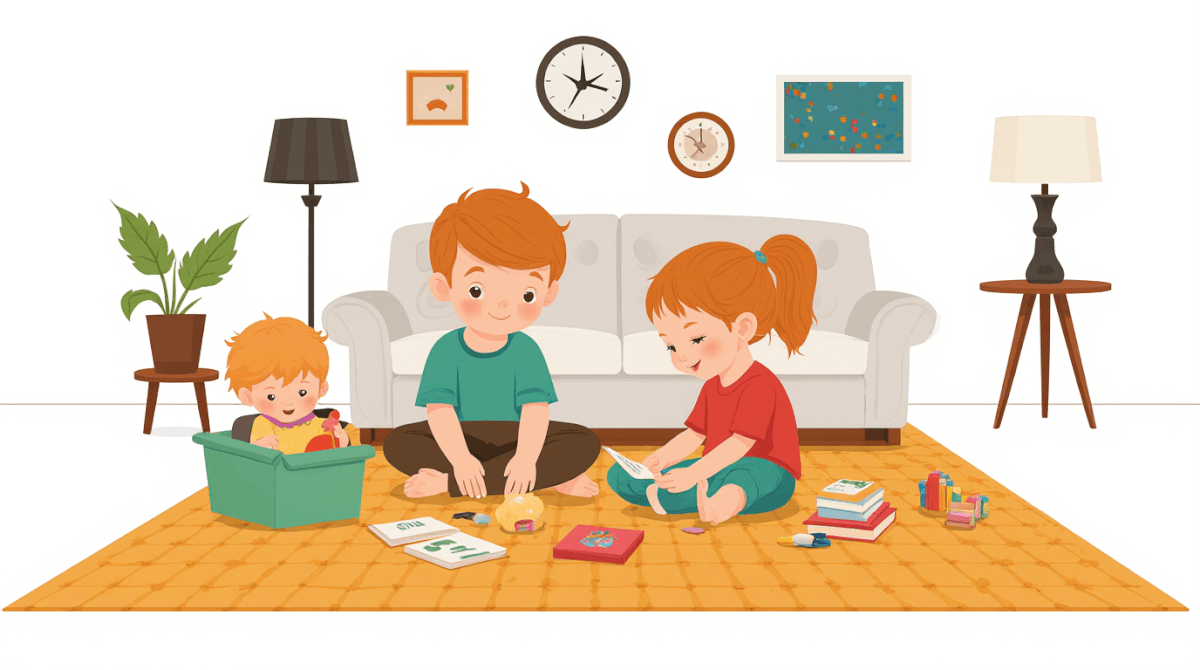
The process of learning cooperation through example can be broken down into several key steps. First, children need to observe others engaging in cooperative activities. During a playdate at home, if parents are seen sharing toys or discussing turn-taking with their child, this serves as an implicit example of cooperation. Another scenario is when siblings work together on a puzzle or share books, showcasing the benefits of collaboration.
Secondly, children must be able to understand and interpret these examples. Younger children might not grasp complex concepts like “sharing” or “turn-taking,” but they can learn from seeing others doing these actions repeatedly. As children grow older, their cognitive abilities allow them to comprehend more nuanced cooperative behaviors. During a group project in school, teachers often model effective communication and problem-solving skills, which students then imitate.
Thirdly, children need to have the opportunity to practice what they observe. This is where the environment becomes crucial. At home, parents can set up scenarios that require cooperation, such as preparing dinner together or planning an outing. In schools, group activities like sports teams or club projects provide natural opportunities for cooperative learning. These practices reinforce the examples children see and help them develop their own cooperative skills.
Fourthly, feedback from peers and adults plays a significant role in refining these behaviors. When children see others praised for cooperating or face social consequences for not doing so, they are more likely to internalize these lessons. In a classroom setting, teachers might explicitly acknowledge students who demonstrate good cooperation during group tasks, thereby reinforcing positive behavior.
Finally, the cultural context of an environment influences how cooperation is perceived and practiced. In communities where teamwork is highly valued, children are likely to encounter cooperative behaviors more frequently, leading them to naturally integrate these practices into their daily lives. In environments that emphasize individual achievement over collaboration, children may develop a different set of social skills.
The influence of the environment on learning cooperation through example cannot be overstated. Consider a family where parents consistently engage in collaborative activities like cooking together or planning weekend outings. Children growing up in this setting are more likely to see firsthand how cooperation can lead to positive outcomes. They may imitate these behaviors without even realizing it, leading to a natural inclination towards teamwork and collaboration.
School environments also play a crucial role. A classroom where teachers promote group work and emphasize the importance of collective effort creates an ideal context for children to learn cooperation through example. When students see their peers working together successfully on projects or solving problems collaboratively, they are more likely to adopt these practices in their own interactions.
Community activities provide additional opportunities for children to observe and practice cooperative behaviors. Participating in neighborhood clean-up events or sports teams exposes children to a broader range of collaborative scenarios, broadening their understanding of what cooperation entails.
The process by which children learn cooperation through example is multifaceted and deeply influenced by environmental factors. From observing adults at home to engaging in cooperative activities in school and community settings, children gradually internalize and practice these behaviors. The quality and nature of these early experiences significantly shape their social development, making them more likely to adopt cooperative attitudes and practices as they grow older.
It is important to recognize that while this process can be observed and analyzed, it does not occur in a vacuum but within the broader context of social, cultural, and relational contexts. As such, creating environments that consistently model and encourage cooperation can play a pivotal role in shaping children’s future interactions with their peers and the world around them.
It is worth noting that while observational learning is powerful, it is not the only mechanism at play. Children also learn through direct instruction, reinforcement, and practice. Nonetheless, understanding how examples influence cooperative behavior provides valuable insights into the complex nature of social development in childhood.