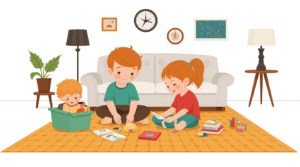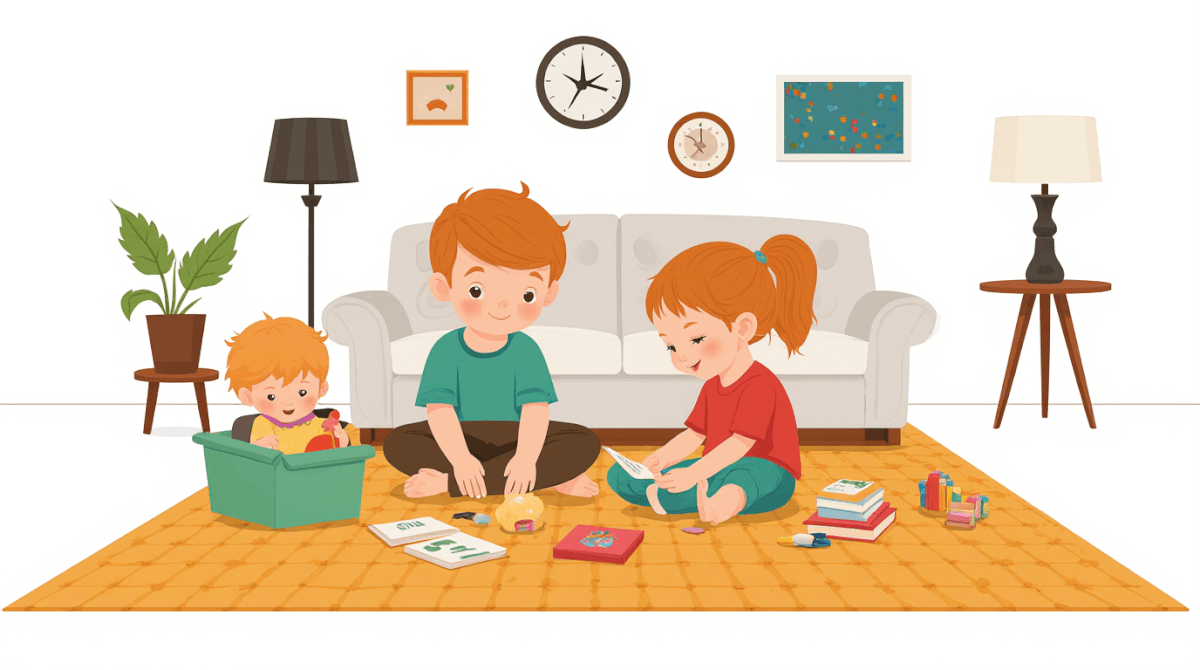
Children learn confidence through supportive guidance from adults who provide a nurturing environment that encourages exploration, risk-taking, and self-discovery. This process is intricately linked to the early experiences of a child’s life, as these form the foundation upon which their belief in themselves is built. The social, cultural, and relational contexts play crucial roles in shaping this development; they influence not only the explicit guidance given but also the implicit messages about what qualities are valued within the family or community. By examining how supportive guidance fosters confidence through three key mechanisms—safe exploration, positive reinforcement, and modeling behaviors—this essay will explore the complex interplay between a child’s experiences and their growing sense of self-worth.
Safe exploration is one of the primary ways in which children learn to trust themselves and their abilities. When adults provide an environment that feels secure and supportive, children are more likely to engage in activities without fear of failure or judgment. Imagine a young child learning to ride a bicycle for the first time. If parents remain nearby, offering words of encouragement rather than constant instruction or correction, the child can focus on the experience of balancing and pedaling. This process is crucial because it helps children develop resilience; when they succeed in conquering small challenges, such as maintaining balance long enough to complete a lap around the yard, they gain confidence that they are capable of mastering new skills.
Positive reinforcement further strengthens this sense of capability by rewarding successful attempts and encouraging persistent effort. In the context of learning to ride a bike, a child might earn praise or a high-five for making it through a lap without falling off. This recognition does not just come from parents; peers can also play a role in reinforcing positive behaviors. When a group of friends celebrates each other’s successes, it creates an atmosphere where everyone feels valued and capable, which is essential for building self-esteem. The language used during these interactions is particularly important because it shapes how children perceive themselves. Encouraging phrases such as “I believe you can do this” or “That was great, let’s try again” foster a growth mindset that values effort over innate ability.
Modeling behaviors is another critical component of supportive guidance in confidence-building. Children observe the actions and attitudes of those around them, especially their caregivers. If parents demonstrate courage by trying new things despite feeling nervous, this sets an example for children to do the same. If a parent shows interest in learning something new, like playing a musical instrument or taking up a hobby, it can inspire their child to explore interests they might not have considered before. This modeling does more than just offer behavioral examples; it also communicates that failure and uncertainty are normal parts of growth and learning.
The social, cultural, and relational contexts play an essential role in how these mechanisms operate within the individual’s life. A child growing up in a community where teamwork is valued might be encouraged to work alongside others on projects, which can build not only confidence but also interpersonal skills. Similarly, cultures that celebrate individual achievement and personal responsibility may provide different types of encouragement than those that emphasize collective success. These contexts influence the type of guidance provided; they shape what parents consider appropriate behaviors and how they respond when children face challenges.
The quality of relationships within a child’s environment is crucial. A supportive relationship with a mentor or role model can provide additional opportunities for growth and reinforcement. A teacher who notices a student struggling with math might offer extra help during office hours or suggest resources that make the subject more accessible. Such interactions not only address academic challenges but also reinforce the message that help and support are available when needed.
Children learn confidence through supportive guidance by engaging in safe exploration, receiving positive reinforcement, and observing modeled behaviors within their social, cultural, and relational contexts. These mechanisms work together to create a nurturing environment where children can explore their abilities without fear of failure, celebrate their successes, and see examples of resilience and perseverance. The cumulative effect is the development of a strong self-concept that values effort and acknowledges individual capabilities. This process is not just about achieving success; it’s about building a foundation of trust in one’s own potential, which serves as a cornerstone for future personal growth and success.
References:
Harter, S. (1985). Effectance motivation revisited: A theory of self-advancement. Psychological Review, 92(3), 674-690.
Bronfenbrenner, U., & Morris, P. A. (1998). The ecology of developmental processes. In W. Damon (Ed.), Handbook of child psychology: Volume 1: Theoretical models of human development (pp. 993-1028). Wiley.
Related Reading
– Alice Miller — The Drama of the Gifted Child
– Daniel J. Siegel — Parenting from the Inside Out