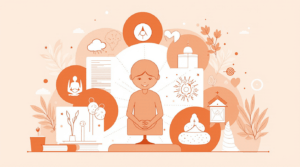
In the quiet solitude of early mornings, before the bustling world imposes its demands upon me, I often find myself engaged in what can only be described as self-observation. This practice is not merely an external act but a profound inner journey into the depths of my being. It is through this discipline that I seek to understand and align with the deeper dimensions of spirituality, which are intimately tied to personal meaning and identity.
Self-observation begins with awareness. By observing myself without judgment or preconceived notions, I can begin to see not only who I am but also what shapes me—my thoughts, emotions, desires, and actions. This practice invites an introspective honesty that is essential for spiritual growth. It allows me to recognize patterns of behavior that may be unhelpful or harmful, thereby fostering a sense of inner coherence.
One of the most significant challenges in self-observation is navigating the tension between certainty and uncertainty. In my quest for meaning, I often find myself oscillating between moments of profound clarity and periods of deep doubt. There are times when I feel an unshakeable conviction about what matters deeply—be it a sense of purpose, a commitment to others, or a connection to something greater than myself. Yet, these certainties can give way to moments of profound uncertainty and questioning. It is in acknowledging this tension that self-observation becomes both necessary and transformative.
Presence plays a crucial role in this process. Being fully present in the moment, without distraction, allows for a clearer understanding of my experiences. When I am truly present, I can observe my thoughts and emotions more objectively, rather than being carried away by them. This presence is not just about being physically where I am; it is an active engagement with my inner world that fosters a sense of grounding and stability.
This practice of self-observation also brings up the tension between control and surrender. There is a natural human desire to exert control over our lives—our choices, outcomes, and even our emotions. Yet, in the process of self-observation, I am continually reminded that much of my inner world operates beyond conscious control. Emotions arise unbidden; thoughts emerge unexpectedly. This realization can be both liberating and humbling. It invites a shift from an attitude of trying to control everything to one of embracing the flow of life with openheartedness.
Doubt is another companion in this spiritual journey. Doubt, much like uncertainty, is not inherently negative but can serve as a catalyst for deeper reflection. When I doubt my beliefs or actions, it provides me with an opportunity to question and explore more deeply. It is through these moments of doubt that I can challenge my assumptions and potentially uncover new insights about myself and the world around me.
Trust complements this process. Trust in oneself, in one’s ability to navigate both certainty and uncertainty, and trust in a greater force or purpose can provide a foundation for resilience. While self-observation may reveal flaws and uncertainties, it also highlights areas of strength and potential. By cultivating trust, I am better equipped to face the unknown with confidence and openness.
In this journey of self-observation, spirituality is not just about external practices or beliefs but about an inner coherence that arises from a deeper understanding of oneself. It is through these observations that one can begin to align their actions and thoughts more closely with a sense of purpose and meaning. This alignment fosters a sense of wholeness and peace, even in the midst of life’s complexities.
The discipline of self-observation, becomes not just an intellectual exercise but a profound act of self-discovery and spiritual growth. It is through this practice that we can peel away layers of conditioning and superficiality to uncover the essence of our being. In doing so, we may find that spirituality is not something external or imposed upon us, but an inherent part of our inner journey towards deeper understanding and fulfillment.
As I continue on this path, I am reminded that self-observation is a continuous process, one that requires patience, humility, and openness. It is in embracing these qualities that I can foster the inner coherence and clarity needed to navigate life’s complexities with grace and purpose.
Related Reading
– Richard Rohr — The Universal Christ
– David R. Hawkins — Letting Go