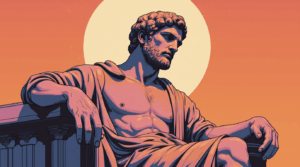
Uncertainty, by its very nature, challenges the human need for control and predictability. We find ourselves in a perpetual state of waiting, not knowing what tomorrow will bring, or even what the next moment will hold. This state can be both liberating and terrifying. It frees us from the shackles of rigid expectations, allowing us to adapt and find new paths when old ones are no longer viable. It can breed anxiety and fear, as the absence of certainty leaves a void that is hard to fill.
Consider the metaphor of sailing: one sets out on a journey without knowing precisely where the winds will take the vessel or how long the voyage will last. The navigator must rely on stars, currents, and the inherent wisdom derived from experience, all while recognizing that the destination may change over time. In this analogy, the sailor’s task is not to eliminate uncertainty but to embrace it as an integral part of the journey itself.
Philosophically, this problem resonates deeply with the concept of existentialism, where the emphasis is on the individual’s freedom and responsibility in a world devoid of inherent meaning. Jean-Paul Sartre famously declared that “existence precedes essence,” suggesting that we create our own purpose within an indifferent universe. This does not imply a lack of structure or direction but rather an understanding that such structure must be self-imposed. In this sense, the challenge of living with uncertainty becomes a call to action: to forge one’s path in the face of the unknown.
The psychological impact of uncertainty can be profound. It often leads to a state of hypervigilance, where the mind is constantly on alert, anticipating potential threats or negative outcomes. This state can be debilitating, as it restricts one’s ability to fully engage with the present moment and enjoy life’s simpler pleasures. Yet, paradoxically, it is precisely in this state of uncertainty that some of the most meaningful and fulfilling experiences occur.
Consider the experience of a first love or a new adventure: these moments are often tinged with anxiety and fear but also with excitement and anticipation. It is within these contexts that we find ourselves fully immersed in the process, rather than merely planning for the outcome. This immersion, this engagement, is a form of existence that transcends mere survival and touches the heart of what it means to be alive.
Uncertainty can serve as a catalyst for growth and transformation. In the face of the unknown, individuals are often forced to confront their fears, adapt to new circumstances, and find innovative solutions. This process can be challenging but ultimately rewarding. It allows one to develop resilience and a deeper appreciation for the unpredictability of life.
From a philosophical perspective, this challenge is also reflected in the concept of “fear of the void” or “angst,” as articulated by Søren Kierkegaard. This anxiety arises from the recognition of one’s own freedom and the accompanying responsibility to make choices that align with one’s values. It is the realization that one cannot rely on external factors or predetermined paths but must forge a personal path, often in the face of the unknown.
The challenge of living with uncertainty extends beyond the individual. Societal structures and collective experiences are also shaped by this fundamental reality. In times of crisis or global upheaval, individuals and communities are forced to navigate uncharted territories, often without clear guidance or established norms. This can lead to a sense of disorientation but also to new forms of solidarity and innovation.
The arts provide a unique lens through which to explore these themes. Literature, film, and music often deal with the human condition in its most raw and unfiltered form, reflecting the complexities of existence within an uncertain world. Authors like Franz Kafka and Albert Camus use narrative techniques to highlight the absurdity and unpredictability of life, forcing readers to confront their own uncertainties and make meaning from these chaotic experiences.
The challenge of living with uncertainty is a complex and multifaceted issue that challenges our very understanding of what it means to be human. It demands a constant reevaluation of our assumptions and a willingness to adapt in the face of the unknown. While the journey may be fraught with anxiety and fear, it also offers the potential for growth, transformation, and a deeper appreciation for the richness of life. As we continue to navigate the uncertainties of existence, we are not merely passive observers but active participants in shaping our own destinies.