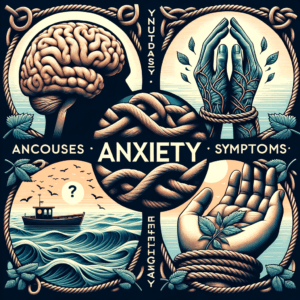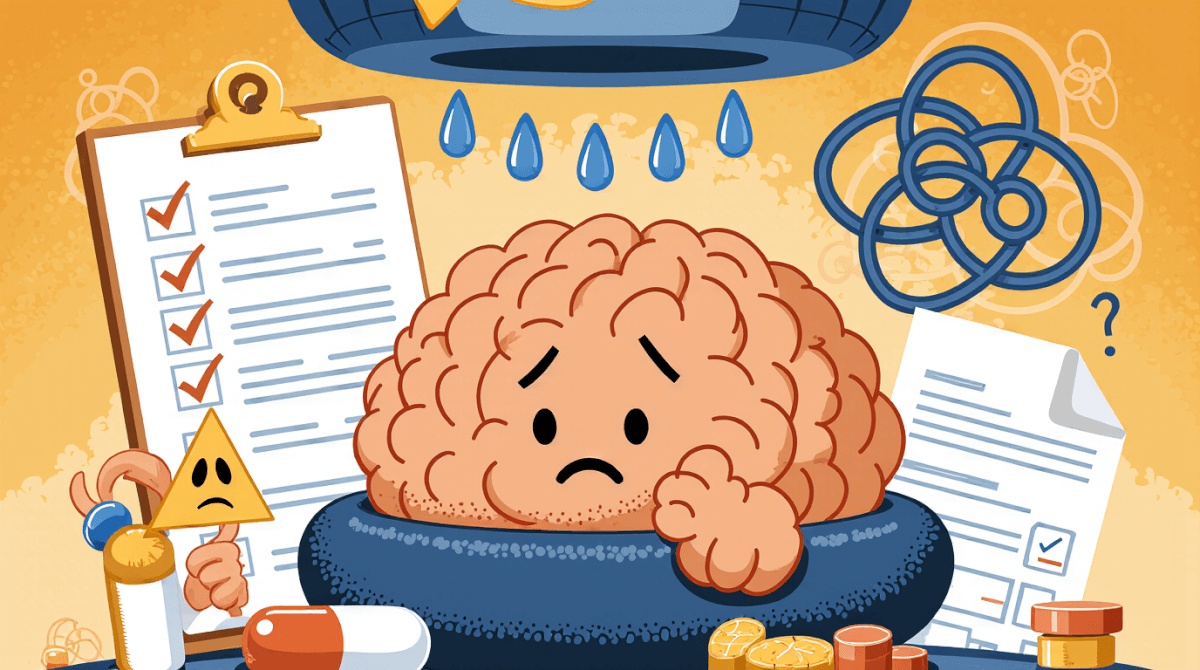
Consider the analogy of being caught in a thick fog; everything becomes hazy and hard to discern. Similarly, when our minds are filled with negative thoughts, the clarity of thought and perspective can become obscured. Over time, this mental fog can create a sense of entrapment, making it challenging to break free from these patterns. This is not just a metaphor but reflects a common psychological experience where individuals find themselves repeatedly returning to troubling thoughts, even when they know such thinking is unhelpful.
The mechanics behind these negative thought loops are rooted in the way our brains process information. Constant exposure to stimuli, whether through social media, news, or personal life events, can lead to an overburdened cognitive system. Our brain’s capacity to process information is finite; when it is overwhelmed by too much input, the ability to filter out irrelevant details diminishes. This can result in a phenomenon known as cognitive overload, where the mind struggles to maintain focus and clarity. As a consequence, negative thoughts can dominate one’s consciousness, reinforcing the feeling of being trapped.
Emotional neglect or long-term stress can exacerbate this condition by further depleting mental resources. When we experience emotional exhaustion or prolonged periods of stress, our ability to manage and regulate emotions is compromised. This can lead to a vicious cycle where emotional dysregulation fuels more negative thoughts, which in turn cause additional emotional distress. Over time, this can create a persistent state of low mood and anxiety, making it increasingly difficult to break away from these thought patterns.
Another significant factor contributing to the entrapment in negative thought loops is the impact of attention. In today’s world, where distractions are abundant and constant, our ability to maintain focused attention is challenged. The brain’s natural inclination towards novelty and distraction can make it easy to get sidetracked by less pressing concerns, often at the expense of addressing more important issues. This fragmentation of attention can be likened to a series of quicksand traps that ensnare one’s focus, making it harder to engage in meaningful and productive thought.
Reflecting on these mechanisms, we see that awareness plays a crucial role in understanding and navigating these thought patterns. By becoming mindful of the signs and symptoms, such as persistent negative thoughts or feelings of entrapment, individuals can begin to recognize when their mental state is deteriorating. Awareness can provide a starting point for introspection and self-reflection, essential steps towards managing these thought loops.
Attention, is not just about recognizing the problem; it is also about actively engaging in behaviors that counteract these negative patterns. Setting boundaries around screen time or engaging in regular mindfulness exercises can help to reset one’s mental state and improve overall well-being. Rest, both physical and mental, is another critical factor. Ensuring adequate sleep and engaging in activities that promote relaxation, such as reading or listening to calming music, can significantly reduce the intensity of negative thought loops.
In summary, feeling trapped in negative thought loops is a complex interplay of factors that can overwhelm one’s cognitive and emotional resources. This experience highlights the importance of recognizing and addressing the underlying causes, such as mental overload, constant stimulation, or emotional neglect. By fostering greater awareness and engaging in practices that support mental health, individuals can begin to navigate these challenging thought patterns and find a path towards greater clarity and well-being.