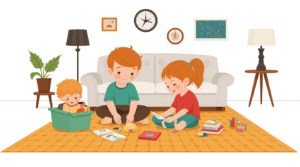
The act of raising a child, particularly through the lens of parental modeling, is a profound and complex journey that demands an unyielding emotional commitment from the parent. At its core, this process involves not only teaching and guiding but also confronting one’s own deepest fears, insecurities, and desires. The psychological landscape that emerges is both rich and fraught with tension, as the parent must navigate the delicate balance between love, discipline, and self-discovery.
Parental modeling plays a crucial role in shaping a child’s behavior, particularly when it comes to conflict resolution. The internal dynamics of a parent, their history, and their emotional state often serve as the foundation upon which they build their parenting style. This is not merely a matter of instruction; it is an intricate interplay of emotional cues and reactions that can significantly influence how a child handles disagreements and challenges.
One of the primary challenges faced by parents is the inherent tension between their intentions and the outcomes of their actions. A parent may intend to teach their child about empathy and understanding, but the way this is communicated can sometimes lead to misunderstandings or even conflict. The parent’s own emotional responses—whether they are quick to anger or overly lenient—can inadvertently become a blueprint for how their child perceives and processes conflict.
The impact of one’s personal history cannot be overstated. A parent’s past experiences with conflict, whether in familial or other settings, often inform their current approach to handling disagreements. Someone who grew up in a household where open communication was lacking might find it difficult to initiate such discussions, perpetuating a cycle that their child may later experience. A parent who had a nurturing and emotionally supportive upbringing is more likely to foster similar qualities in their own children.
This brings us to the crucial role of emotional presence and consistency. A parent who is consistently present and emotionally attuned provides a stable emotional environment for their child. This stability serves as a buffer against external stressors, helping the child develop resilience and the ability to manage their emotions effectively. When a parent models this behavior, they inadvertently teach their child that emotions are valid and can be expressed in healthy ways.
The conflict between love, limits, and authority is another pivotal aspect of parental modeling. Love is the driving force behind most parenting decisions, yet setting boundaries and enforcing rules can sometimes feel contradictory to this love. A parent who struggles with this tension might find themselves overindulging their child or imposing overly strict restrictions, neither of which serves the child’s long-term development. Balancing these elements requires a deep understanding of the child’s needs and the parent’s own capacity to manage their emotions.
The act of raising a child often leads to a significant transformation in the parent’s identity. The responsibilities and challenges of parenthood force parents to confront their own weaknesses and limitations, fostering growth and self-awareness. This process is not always easy; it can be met with moments of frustration, disappointment, and even despair. Through these trials, parents often emerge with a greater sense of purpose and a deeper understanding of what matters most in life.
The psychological burden of modeling conflict behavior also lies in the constant evaluation of one’s own behavior. Parents are acutely aware that their actions are not only shaping their child but also serving as a reflection of their own character. This internal scrutiny can be overwhelming, leading to moments of self-doubt and even guilt. Yet, it is precisely this awareness that drives parents to seek out better ways to handle conflict, ensuring that their child learns healthy conflict resolution skills.
The process of raising a child through parental modeling is a deeply personal and profoundly transformative experience. It involves navigating the complex interplay of emotions, past experiences, and current circumstances. While it presents significant challenges, it also offers invaluable opportunities for growth and learning. The emotional presence, consistency, and love that parents bring to this journey are crucial in shaping not only their child’s behavior but also their own personal development. As parents continue to navigate these intricacies, they find themselves not just as guides but as fellow travelers on the path of life.
Related Reading
– Daniel Hughes – Attachment-Focused Parenting
– Thomas Gordon – Parent Effectiveness Training