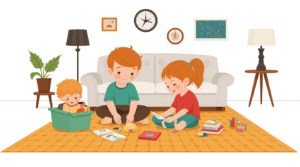
At its core lies the contradiction between the necessity of parenting as a deeply personal and individualistic endeavor and the unavoidable comparisons that arise within familial contexts. Parents, in striving to raise well-adjusted children, find themselves constantly evaluating their child’s progress against benchmarks set not only by external societal expectations but also by comparing them with siblings or other family members. This dynamic can lead to both positive reinforcement when a comparison is favorable and self-doubt and anxiety when it is unfavorable.
The psychological tension that arises from this contradiction is profound. Parents are acutely aware of the importance of creating an environment where each child feels valued for their unique contributions and achievements. Affection, consistency, and emotional presence—these elements form the bedrock upon which a secure attachment can be built. These very same values can paradoxically fuel internal conflicts as parents grapple with the realities of comparison.
Consider the scenario where a parent finds themselves subtly comparing their child’s academic performance to that of another sibling or even to societal norms. This act of comparison might start innocently enough—perhaps out of concern for the child’s well-being or simply from wanting them to succeed. What begins as an attempt to provide guidance can quickly become a source of stress and self-criticism. The parent may question whether they are doing enough or if their efforts fall short in some way.
This internal conflict extends beyond just academic performance. Issues like social interactions, hobbies, and personal qualities can all become arenas for comparison. Each area presents its own set of challenges as parents must balance the desire to encourage growth with the reality that every child progresses at a different pace. The complexity arises from the fact that while these comparisons are driven by genuine concern and love, they often result in feelings of inadequacy or frustration.
The impact on the parent’s emotional state is significant. Persistent comparison can lead to cycles of self-doubt where parents second-guess their methods and decisions. This internal struggle not only affects parental well-being but also influences how they interact with their children. In moments of heightened anxiety, a parent might become overly critical or dismissive of their child’s efforts, inadvertently creating an environment that stifles confidence.
It is important to recognize the role affection plays in this dynamic. While it can provide comfort and security for both parents and children, its absence or inconsistency can exacerbate feelings of comparison and inadequacy. Children who feel loved unconditionally are more likely to develop a healthy sense of self-worth regardless of external validations. Those who perceive their worth through comparisons may struggle with low self-esteem even in the face of successes.
Consistency is another critical factor. A parent’s ability to maintain stability and predictability in interactions can significantly mitigate the effects of comparison. When children know what to expect from their parents—whether it’s praise for effort or constructive feedback—they are better equipped to handle external pressures. Inconsistency can undermine these efforts as children may become uncertain about their value, leading them to seek validation elsewhere.
The emotional presence of a parent also plays a crucial role in shaping the child’s experience. Being present emotionally means being fully engaged and attentive during moments that matter most—celebrating victories, offering support through challenges, and simply sharing life’s joys and sorrows together. This kind of presence fosters trust and intimacy, allowing children to express themselves freely without fear of judgment.
Achieving this level of emotional connection can be challenging when parental focus is diverted by the pressures of comparison. A parent might find it difficult to fully engage in moments that could strengthen their bond with a child if they are preoccupied with how well their offspring measure up against others. The balance between nurturing and comparing becomes increasingly delicate as children grow older, navigating the transition from dependence on parental guidance to developing independence.
While affection, consistency, and emotional presence undoubtedly contribute positively to child development, these same factors can complicate the process of parenting when intertwined with comparison. The internal conflict parents face is not just about achieving external benchmarks but also about reconciling their desire for success with maintaining a nurturing environment free from the shadows of unspoken judgments.
The journey through this complexity requires self-awareness and intentional effort to manage comparisons constructively. By recognizing these contradictions, parents can work towards creating a more balanced approach that honors each child’s unique path while fostering an atmosphere of love and acceptance. It is in embracing the inherent challenges of parenting with compassion and understanding that true growth for both parent and child becomes possible.