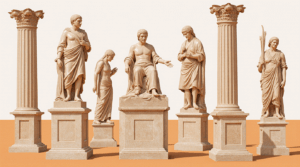
- Philosophy shapes fundamental human questions about existence, knowledge, and ethics.
- Its traditions influence diverse fields from science to politics and modern technology.
- Understanding philosophy’s uses reveals its ongoing relevance in addressing contemporary challenges.
The Enduring Importance of Philosophy in Human Inquiry
Philosophy, often viewed merely as abstract theorizing, is fundamentally the pursuit of wisdom and understanding about life’s most essential questions. Do we really need philosophy? This question cuts to the core of how humans seek meaning, make decisions, and structure societies. Since the times of ancient thinkers like Socrates (470–399 BCE), philosophy has questioned the assumptions underpinning knowledge, ethics, and reality itself. Socrates’ method of dialectical questioning aimed to expose contradictions and stimulate critical thinking—a tool still used in education and discourse today. This tradition laid the groundwork for the critical inquiry that fuels scientific and ethical progress.
Philosophy’s uses extend beyond the purely academic; it forms the foundation of the scientific method and ethical standards. Consider the Scientific Revolution in the 17th century, influenced heavily by philosophers like René Descartes. Descartes’ 1637 work, Meditations on First Philosophy, introduced methodological skepticism, emphasizing doubt as a tool for attaining certainty. This philosophical approach underpins modern scientific inquiry where hypotheses are rigorously tested, and conclusions remain provisional. In contemporary society, this legacy is visible in technologies reliant on empirical research and logical reasoning, such as artificial intelligence and medicine.
Moreover, philosophy’s intrinsic value lies in fostering a reflective society capable of critical self-examination. The focus keyword appears here naturally: “Do we really need philosophy?” is answered by its critical role in nurturing democratic values and human rights. For example, Enlightenment philosophers like John Locke and Immanuel Kant shaped principles of liberty and autonomy, laying ideological foundations for modern democracies. Locke’s Two Treatises of Government (1689) argued for natural rights to life, liberty, and property—a radical idea influencing constitutional governments worldwide. Ethics, politics, and law continuously evolve through philosophical debate, underscoring philosophy’s ongoing practical utility.
Philosophical Traditions and Their Impact on Modern Culture and Ethics
Philosophy is not monolithic but consists of diverse traditions that contribute varied perspectives on reality and human conduct. Eastern philosophies, such as Confucianism and Buddhism, have provided rich ethical frameworks emphasizing harmony, self-cultivation, and compassion. Confucius (551–479 BCE), for example, focused on relationships and social roles, shaping centuries of East Asian cultures and governance through principles of respect and duty. Meanwhile, Buddhism’s emphasis on mindfulness has significantly influenced contemporary wellness culture and psychotherapy, highlighting philosophy’s direct application in everyday life.
In Western traditions, existentialism, developed in the 19th and 20th centuries by figures like Søren Kierkegaard and Jean-Paul Sartre, interrogates issues of freedom, individuality, and meaning amid an indifferent universe. Sartre’s 1943 work Being and Nothingness famously asserts that “existence precedes essence,” compelling individuals to forge their own purpose. This challenges deterministic narratives and empowers personal responsibility, resonating with modern themes in psychology and social movements advocating self-expression and identity rights.
These philosophical currents offer ethical guidance critical for navigating today’s complex moral dilemmas. Bioethics, a modern interdisciplinary field, owes much to philosophical analysis, addressing questions about medical innovation, cloning, and digital privacy. For instance, debates surrounding AI ethics involve applying age-old philosophical principles of justice and human dignity adapted to new technology. The rapid growth of social media platforms raises questions about identity, truth, and manipulation—topics previously explored by philosophers like Friedrich Nietzsche, who dissected truth’s subjective nature. Philosophy thus functions as an intellectual compass, helping societies negotiate the ethical landscape shaped by technological and cultural transformations.
Practical Uses of Philosophy in Contemporary Society
Reflecting on whether we need philosophy throws light on its pragmatic applications in education, politics, and technology. Philosophy teaches critical thinking and argumentation skills essential to informed citizenship and personal decision-making. In education, the Socratic method encourages students to analyze assumptions and articulate beliefs clearly—skills vital in a world overwhelmed by information. Moreover, ethical philosophy underpins professional codes of conduct in medicine, law, and business, fostering accountability and trust.
In politics, philosophical inquiry informs policies on justice and human rights. The Universal Declaration of Human Rights (1948), promoted by figures like Eleanor Roosevelt, has philosophical roots in natural law and Kantian ethics, advocating for inherent dignity and equality. These principles guide international relations and humanitarian efforts, showcasing philosophy’s tangible benefits.
Innovation and technology also benefit from philosophical thought. The rise of artificial intelligence challenges traditional notions of consciousness and personhood, engaging philosophers like Hubert Dreyfus, who critiqued the limits of computational models of human intelligence. Continuing dialogue between philosophy and computer science ensures that advancements consider ethical implications and human values. For example, debates about autonomous vehicles’ decision-making in accident scenarios draw on utilitarianism and deontological ethics, revealing how philosophy directly influences practical design choices.
In conclusion, the question of “Do we really need philosophy?” can be answered affirmatively through its deep, pervasive influence on human understanding, culture, and societal progress. Philosophy’s traditions provide critical tools for examining reality and morality, informing science, governance, and technology alike. It cultivates thoughtful, engaged individuals capable of addressing contemporary challenges with nuance and rigor. Far from obsolete, philosophy remains an indispensable resource for navigating modern complexities and shaping a more reflective and ethical world.